

Sunday 3rd November 2024
Over the years, many people have questioned me about why children and young people decide to live on the streets. These resilient souls navigate a world many question, but few truly understand. With its raw and untamed allure, the street seduces them into its embrace, offering a kind of liberated survival on the fringes of society. Yet beneath its rough exterior lies a harsh paradox—leaving is as formidable as surviving.
This past week, I have been helping 17-year-old Ruben try and make positive choices about leaving the streets. Street life has been his teacher and his tormentor, but a recent, cruel twist had knocked him, quite literally, onto the harsh reality of his chosen path. A car, in a reckless dance with fate, had left him sprawling, his leg fractured, his body an aching map of bruises.
I went with his older brother, and together, we carried him to my car and drove him to the hospital. Two days before, he had been taken there by the “Bomberos”, the local volunteer fire and rescue brigade, but had signed himself out due to lack of help and the many hours he had to wait. There was also the draw to the familiar unpredictability of the streets.
On returning him to the hospital and watching his brother wheel him into the emergency department on a stretcher, I was expecting a lengthy wait outside. About half an hour later, both appeared at the entrance to the emergency department, and I pulled the car up and lifted Ruben back into the car.
He was unable to be cared for as he had signed a release form the day before and, despite not being able to walk due to his broken leg, was told to come back in three months after the Christmas and New Year celebrations. I was rendered speechless.
I could see he was upset, but was trying to maintain his usual steely front and asked to be taken back to the streets. His brother and I pleaded with him, knowing that infections and possible complications could lead to more uncomfortable days ahead.
But here’s where the story takes a heartwarming twist. Just a couple of days later, his sister stepped in, and whatever magic she worked it convinced him to return home - a modest tin shack in the heart of La Terminal, Guatemala City. It’s not much, but it’s a start - a safe haven surrounded by family.
I visited him the following day and he seemed to be quite the different youth I have known for many years. He smiled, a rare occurrence indeed and one that suggested to me he was happier and feeling cared for. He was lying on a metal bed frame, with some cardboard on top of his mattress. I imagined what it would be like to be lying in a tiny tin shack with no windows and nothing to do. There is not even a toilet for him to use.
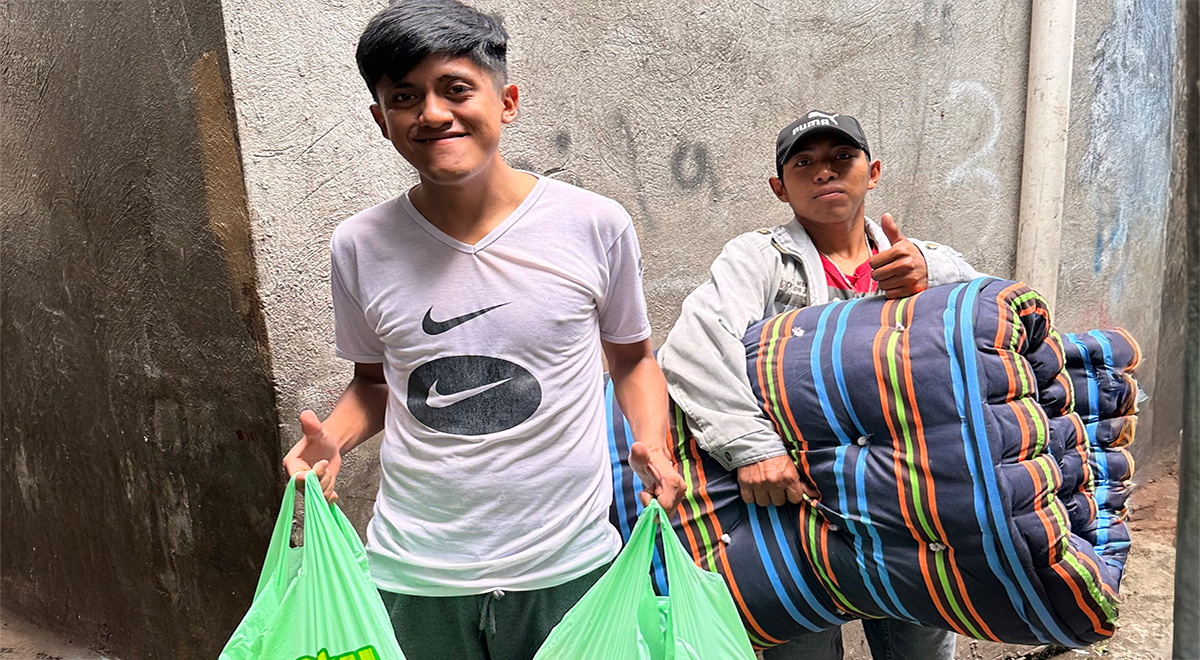
Discussing this with two of our older youth who have been volunteering with us for a while led to a plan of action to buy him a mattress, some craft items and wool to make friendship bands.
The streets don’t easily loosen their grasp, but Ruben has now survived a week without drugs, and already I can see the difference in him. Not only is he much chattier than I have ever seen him before, but he is also asking for prayer. And prayer he will need!
If we can keep him focused on the better road ahead and continue to provide some resources to him and his sister, I believe he can make it.
 Duncan Dyason is the founder and Director of Street Kids Direct and founder of Toybox Charity. He first started working with street children in 1992 when he moved to Guatemala City and founded The Toybox Charity. His work has been honoured by Her Majesty the Queen and he was awarded an MBE the year he celebrated working over 25 years to reduce the large population of children on the streets from 5,000 to zero. Duncan continues to live and work in Guatemala City.