

• +502 5522-3333
  • This email address is being protected from spambots. You need JavaScript enabled to view it.
The "invisible" children of Cobán, Guatemala

Sunday, 25th of January, 2026


Cobán is tucked into the green highlands of Alta Verapaz and feels a world away from the noise of Guatemala City. The air is cooler here, the clouds hang low, and the streets move at a gentler pace. The surrounding hills remind me of Germany and Switzerland, and their likeness to Europe was one of the reasons many Germans settled here in the late 19th Century, establishing businesses and creating an intriguing fusion of Guatemalan and German culture.

But as is so often the case, the serenity of this city, cradled in misty mountains, does not tell the whole story.

This past week, I came to Cobán to continue the mapping of street-living and street-connected children, work that requires time, listening, and presence. Unlike larger cities, the vulnerability here is quieter and more dispersed. Children are less visible, less obvious, and often woven into informal work, family breakdown, migration routes, and hidden urban poverty. You don’t “find” them by accident. You have to walk, observe, talk, and earn trust.

Mapping isn’t about numbers alone. It’s about understanding where children gather, why they are there, and what risks surround them. It’s about noticing the boy who drifts around the market all day but never seems to go home; the girl selling small items on the pavement long after school hours; the group of young people who sleep somewhere nearby but remain invisible during the day.

coban1Cobán once again reminded me why this work matters so deeply. Because even in places wrapped in beauty, children can grow up believing that hope isn’t meant for them. And yet, with the right intervention at the right time, even the smallest glimmer can become a turning point.

This week was about listening to the city and to children whose stories are so easily missed. It was an intense and exciting time of wandering the city centre, meeting people whose experiences and memories no one had taken the time to truly listen to or record.

My time on the streets is always an initial burst of information overload. I was joined by Sandy, an old friend who worked alongside me on the streets of Guatemala City 12 years ago and who, together with her husband and three children, now lives, works, and ministers in San Juan Chamelco, a small town just 15 minutes from Cobán.

Despite living here for nearly ten years, Sandy was keen to walk the city streets with me, listening to the voices of those who call the streets home and to those whose connection to street life remains strong.

I wasn’t expecting to receive so much insight in such a short period of time. We listened to Andrés, a 65-year-old man who has been cleaning shoes in the city park for 52 years. His experience was invaluable, offering a window into the past that confirmed many of my observations about street-living children.

In the early 1990s, the number of street-living children in Guatemala rose to an estimated 5,000 (Casa Alianza and the BBC), with the majority surviving on the streets of Guatemala City. Sitting on the low, crumbling concrete wall where his customers rest while Andrés polishes their shoes, he told us about the 30 to 50 street-living children once present in Cobán, and how those numbers gradually reduced through the intervention of local charities, churches, and the development of state institutions that began offering children alternatives to life on the streets.

His memories were later confirmed and expanded through conversations with local police, municipal authorities, and charity practitioners, including Odethe, who has supported children in the city for more than 30 years.

The situation today is starkly different and helps explain both how and why the number of street-living children here has fallen, now effectively down to zero.

I still have two more major cities to visit in Guatemala before my studies take me to Honduras, El Salvador, Nicaragua, and Costa Rica. I’m quietly encouraged to see that what has been achieved in Guatemala City has also been realised in Cobán, something I also witnessed earlier this year in Belize.

Yet as we continued walking and listening, another reality emerged. Conversations with people across the city revealed how urgently the hidden risks facing children must still be confronted.

We met Osman, a 12-year-old boy who, alongside his nine-year-old sister, spends his days wandering the city streets selling sweets. Their small hands clutch a small cardboard tray of sweets, and with them, a constant battle, not just to earn enough, but to resist the hunger that tempts them to eat what they are meant to sell.

Osman embodies what it means to have a strong connection to the streets: too young to carry such responsibility yet already navigating survival with quiet determination. The streets are not just a workplace for him; they are shaping his childhood, his choices, and his future.

Recognising the risks he faces, Sandy and her husband, Josué, have committed to following up with Osman and his family next week, a first step towards ensuring that this moment of encounter becomes the beginning of something safer, more hopeful, and more permanent.

coban2As the mapping progressed, the data told a far darker story than the quiet streets suggest. I discovered that girls as young as nine years old are dying in childbirth, not through accident or illness, but as a direct result of sexual abuse by family members. The prevalence of these cases here is more than twice the national average, exposing a level of harm that remains largely unseen, unspoken, and unchallenged.

These are not anomalies. They are the consequences of silence, stigma, and systems that fail to intervene early enough. When abuse is hidden within families, girls become trapped in cycles of violence with devastating, and sometimes fatal, outcomes.

As we continue to reach the most vulnerable children, we will need more resources, more volunteers, and far more time to listen to those who understand this reality best - the children themselves.

To finish the week, Sandy invited me to visit a small Christian children’s club that she and her husband, Josué, run in a town just outside Cobán. The contrast could not have been more striking.

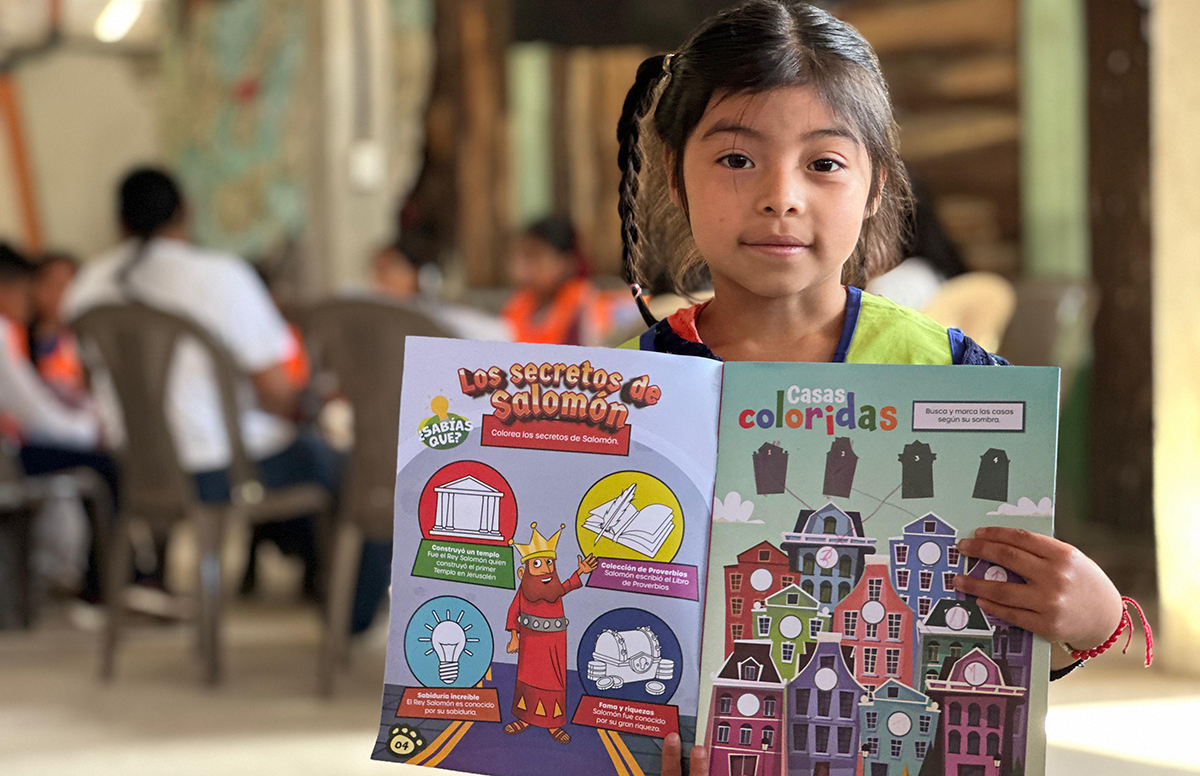
Around 80 children, aged five to twelve, gathered that morning. Laughter filled the space almost immediately. Games helped break the ice, songs were sung with the kind of enthusiasm only children can muster, and Bible stories were shared in ways that felt joyful, accessible, and alive. For a few hours, their large garage became a place of safety, fun, and belonging.

What stayed with me most was not the programme itself, but what it represented. In a region where so many children experience neglect, abuse, and invisibility, this simple club offered something profoundly powerful: attention, care, and consistent love. Each child was known by name. Each one was welcomed without condition. And each one was fascinated by a tall Englishman who had come to listen and to learn.

It was a reminder that prevention doesn’t always begin with large systems or complex interventions. Sometimes it starts with a safe space, a trusted adult, and a message repeated week after week: every child has value, dignity, and hope. In places where the risks are hidden, and the need is great, moments like these matter more than we often realise.
coban3


Duncan Dyason is the founder and Director of Street Kids Direct and founder of TOYBOX UK, El Castillo in Guatemala and SKDGuatemala.  He first started working with street children in 1992, when he moved to Guatemala City after watching the harrowing BBC documentary "They Shoot Children Don´t They?"  His work has been honoured by Her Majesty the Queen, and he was awarded an MBE in the year he celebrated having worked for over 25 years to reduce the number of children on the streets from 5,000 to zero.  Duncan continues to live and volunteer with the Street Kids Direct charity in Guatemala City.
 

Change does not always begin with bold gestures

Sunday, 18th of January, 2026


A single choice can feel insignificant in the moment, a word spoken, a hand held at the opportune time, a door left open rather than closed or a smile in the midst of discontent.

Interestingly, the butterfly effect reminds us that small actions are rarely small in terms of consequence. Just as the flutter of a butterfly’s wings can, in theory, influence the course of a distant storm, the smallest decisions we make can set off chains of events that reshape lives, futures, and maybe even generations.

None of us can fully see where a moment will lead. A decision taken in seconds can echo for years, altering direction, opening possibilities, or restoring hope where it once seemed lost. What appears ordinary can become extraordinary, not because it was dramatic, but because it was intentional.

Change does not always begin with bold gestures or grand plans. More often, it starts quietly: with presence instead of indifference, kindness instead of avoidance, courage instead of silence.

In those moments, the trajectory shifts and outcomes can, and often do, change.

As we begin a new year, many will be making resolutions.  Some want to become fitter, some want to spend less time on social media, read more books, or invest more time in friendships.

Yet it is often the smallest choices that can lead to the most significant change.

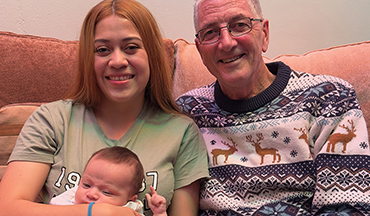
I was reminded of this by Allison, a nineteen-year-old mum from Guatemala City, who shared how the little things we did for her when she was young led to much bigger changes she is now enjoying in her life.

Allison grew up surrounded by poverty and violence, learning her earliest and hardest lessons on the city streets.

With her parents in prison, she and her siblings were cared for by their grandmother. Each day, their grandmother watched cars parked on the street, earning a few pennies from owners while they were at work.

Because of Allison’s strong connection to street life, our outreach team began working with her, her brother, and her sister. All three were invited into the mentoring centre, where we explored ways to support their education and, most importantly, keep them off the streets and out of danger.

Allison became close friends with Moses, a boy I have mentored since he was six. She also formed strong friendships with Danilo and his brother David. I often watched them play together, laughing, winding each other up, protecting one another, and instinctively recognising how to respond when one arrived in tears or covered in bruises.

Just before Christmas, Allison came to the Centro Opp mentoring centre with her baby. We had received a donation of supplies for her and her child, and I took time to sit with her and hear how she was doing.

She was keen to step into the Radio Christmas studio for a short interview and spoke passionately about the support she had received over the years. She reflected on how the small things we did, consistently and patiently over time, led to the much bigger change she is now living.

Her life and her siblings' lives have been profoundly changed.

Two years ago, she recorded a short video about the changes in her life for Radio Christmas.

Today, Allison is excited about her future as a mum. She is part of a Christian church that supports her, her husband, and their daughter, and she speaks with a hope I struggled to see in her eyes as a child.

Listening to Allison filled me with gratitude as she recalled the details we often forget: being woken every school morning, helped to get dressed and into class; having food and resources when there was none at home; support when her mother was released from prison; standing beside the family when her brother was shot at a funeral; and being present again when her grandmother died.

There was much to be thankful for.

Yet last week, I found myself staring at a photo of Allison and me, reminding myself that not every story ends the same way. Sometimes, the young people we rescue from the streets must still make their own difficult commitments to change, and not all of them survive long enough to do so.

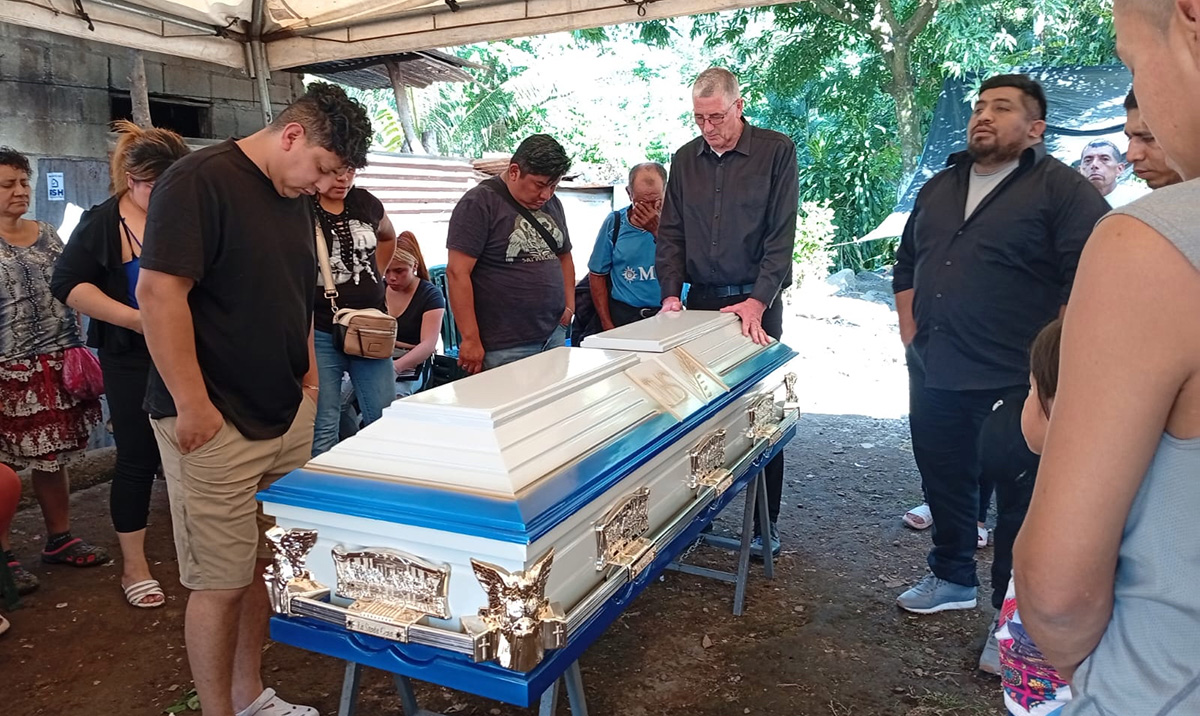
I needed that reminder as I drove back from the countryside, having just buried David.

David was gunned down in the street this past week. He was not involved in a gang and was doing nothing more than visiting his girlfriend and daughter, a journey he made daily. He did not expect to be seen as a threat. But he was. He was shot nine times in the back as he walked past the gang.

davbid funeral

His funeral was devastating on many levels, not least because it meant burying yet another boy we had helped off the rubbish dump, a child we had supported into school, walked alongside through mentoring, and offered countless opportunities to change the direction of his life.

David did not make one catastrophic mistake. It was the accumulation of small decisions, each one seeming survivable at the time, that led him onto a path he felt he could no longer turn back from.

After yet another funeral, I retreated into the darkness of my apartment and asked myself how long I could keep going. After thirty-three years of death, violence, death threats, and the most appalling abuse of children, it is impossible not to be affected.

What I do know is this: I need to pause. To make small, intentional decisions of my own. Decisions I hope will create a greater impact in the lives of many more street-living children in the years to come.

The butterfly effect teaches us this: impact is not measured by size, but by significance. And sometimes, the smallest decision is the one that changes everything.

Maybe now it’s time for me to take that next small step forward.


Duncan Dyason is the founder and Director of Street Kids Direct and founder of TOYBOX UK, El Castillo in Guatemala and SKDGuatemala.  He first started working with street children in 1992, when he moved to Guatemala City after watching the harrowing BBC documentary "They Shoot Children Don´t They?"  His work has been honoured by Her Majesty the Queen, and he was awarded an MBE in the year he celebrated having worked for over 25 years to reduce the number of children on the streets from 5,000 to zero.  Duncan continues to live and volunteer with the Street Kids Direct charity in Guatemala City.
 

There´s no time limit on a hug!

Saturday, 20th of December 2025


No time limit on a hug!

At Dunedin Airport in New Zealand, hugging has been given a time limit!

Three minutes. That’s all you’re allowed.

The rule was introduced to keep traffic flowing in the drop-off zone, with polite signs encouraging travellers to move to the car park if they’re planning something more emotional — “fonder farewells,” as the sign puts it.

I didn’t grow up with hugs. Affection wasn’t part of our family language. As a child, I remember watching other parents wrap their arms around their children at the school gates and quietly wondering what that must feel like.

In Guatemala, you can’t escape hugs.

When I first arrived in 1992, it took some getting used to. The children I met lived on the streets — dirty, unwashed, often high on glue, carrying the physical marks of neglect and the invisible weight of trauma. And yet, almost instinctively, they reached out.

So I hugged them, every time.

Science tells us that hugs calm the nervous system, releasing oxytocin and serotonin,  chemicals that help us feel safe, valued, and connected. Studies have even shown that people who hug more get sick less often.

But you don’t need research to understand what a hug means to a child who has known very little safety.

I was sitting in the Radio Christmas studio the other day, tucked inside our mentoring centre in Guatemala City, when I heard the familiar sounds of children arriving. Laughter, chatter, footsteps running down the corridor. As always, each child came into the studio to say hello.

And each one hugged me.

The teenagers now make me stand up to give them a hug.  They’ve grown so quickly.

Donovan, now fifteen, has been part of my life since he was very young. That day, he seemed different. Quieter, more thoughtful. He waited until he was the last one in the room.

He reached out for a hug.

After a few seconds, I began to let go, the natural social cue that the moment has passed. But Donovan tightened his arms. I waited again. Released again, and once more, he hugged harder.

Eventually, he stepped back, smiled, and walked out. No words. It must have been just what he needed in that moment.

On reflection later that evening, Donovan´s hug reminded me of an experience I had many years ago with Danilo.

Eleven-year-old Danilo came running into the mentoring centre in La Terminal one day, tears streaming down his face. He found me in the kitchen and collapsed into my arms, crying. The kind of cry that tells you something is deeply wrong.

I didn’t ask questions. I didn’t rush him. I just held him.

After a few minutes of deep sobbing, he pulled away, wiped his face, said he had to go, and disappeared as quickly as he had arrived. I never found out what had happened to him that day.

But I know the hug mattered.

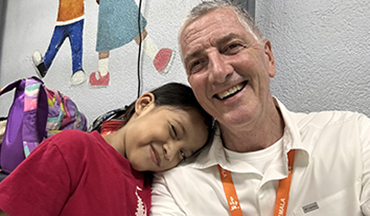
Earlier this week on Radio Christmas, I shared a moving story about Amarantha (article photo), a little girl who insists on being picked up so she can wrap her arms around your neck and snuggle in until you physically have to hand her to someone else.

One of the staff members at the mentoring centre told me recently about a new girl who had arrived with a friend already in the programme.

She didn’t play. She barely spoke.

Every time the doorbell rang, she flinched and stared at the exit.

Trauma has a way of announcing itself quietly.

After a few hours, as the other children laughed and settled into the rhythm of the centre, she began to relax, just a little.

When it was time to go home, she leaned in and whispered something to one of the team.

“Could I have one of those?” she asked, pointing to another child being hugged goodbye.

She didn’t know the word for hug. She just knew she wanted to feel whatever that was.

This is the heart of what we do.

Sometimes it looks like protection, advocacy, or education. Sometimes it looks like homework help, hot meals, or safe spaces. And sometimes, very often, it looks like arms wrapped around a child who has never known what safety feels like.

There is no three-minute limit here. Just presence. Just consistency. Just love lived out, day after day.

It is in these simplest moments that lives begin to change, and I hope that these simple actions will help create loving, caring adults who will change the course of their lives and be part of a much bigger solution to preventing more children from taking to the streets.


Duncan Dyason is the founder and Director of Street Kids Direct and founder of TOYBOX UK, El Castillo in Guatemala and SKDGuatemala.  He first started working with street children in 1992, when he moved to Guatemala City after watching the harrowing BBC documentary "They Shoot Children Don´t They?"  His work has been honoured by Her Majesty the Queen, and he was awarded an MBE in the year he celebrated having worked for over 25 years to reduce the number of children on the streets from 5,000 to zero.  Duncan continues to live and volunteer with the Street Kids Direct charity in Guatemala City.
 

Where the School Fails, the Streets Will Embrace

Sunday 28th September, 2025


Each generation shapes the nation's future. In Honduras, that future is slipping away. The classrooms may be open, but for too many children, education never truly begins. The warning signs are already present, and unless quick action is taken, Honduras risks losing more than test scores. It could forfeit the very hope of social mobility, stability, and dignity for millions of young people.

This week, I visited two remarkable projects in Honduras that are daring to stand in the gap.

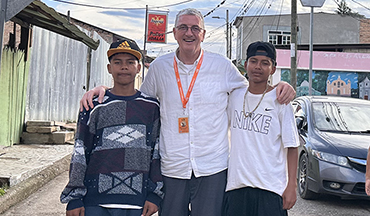
The first was the Micah Project near the capital, Tegucigalpa. From the moment you drive into the spacious property, peace greets you. It’s a tangible sign of grace for boys rescued from the streets of the capital. The staff radiate joy and love. They don’t just work there; they delight in being with the boys. For children who have never known stability, Micah offers what every child craves: a family.

Michael Miller, the Director and Founder, reminds me that Micah is always spoken of in terms of family. “Every boy longs to belong,” he explains. And here, they discover the beautiful reality behind that word.

From Tegucigalpa, I travel to Proyecto Alas in Talanga. The contrast in setting is striking, but the heartbeat remains the same. As children arrive at the mentoring centre, they don’t simply walk through the door; they burst in, faces lit with joy, excitement overflowing. Their enthusiasm is infectious.

As I stand watching, two arms suddenly wrap tightly around my chest. A little game of hide and seek follows until a grin peeks around my shoulder. It’s Danny, 15 years old, a boy I remembered from my last trip. Right behind him is his twin brother, Angel.

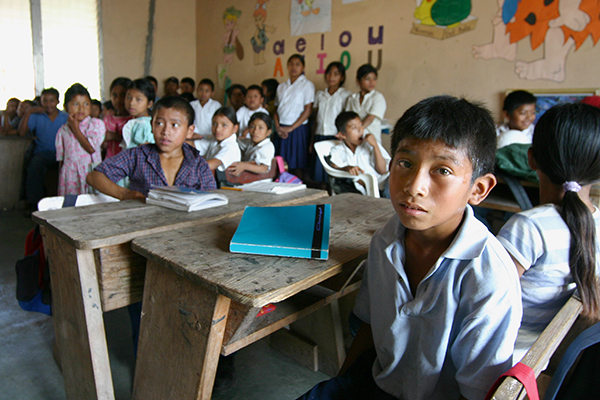
The twins’ story is heartbreaking. Both boys have been out of the school system for years. Despite being “promoted” through three grades, they cannot read or write a single word.

How is that possible?

honduras schoolIt’s not just their story; it’s Honduras’ story. The World Bank reports that nearly 8 in 10 children of late primary age in Honduras lack proficiency in reading skills. Imagine sitting through years of lessons and still being unable to understand a sentence. This occurs every day. Although 95% of children enrol in primary school, the reality is grim: only 6 out of every 20 will graduate from secondary school. By adolescence, almost 41% of boys aged 12–16 are already out of school.

The numbers are shocking. But sitting across from Danny and Angel, the statistics have faces.

Over lunch — their first meal of the day — they share fragments of their story. They live with their grandparents. Their grandmother is an alcoholic. Their grandfather struggles to provide, scraping together a living by copying and selling pirate films. Their mother is in Guatemala, and their father is absent. Hunger is a constant companion, and gangs hover at the edges of their young lives.

I look at them and silently count the risk factors: poverty, broken family ties, hunger, lack of education, and community violence. If not for Proyecto Alas, where would these boys be now?

Later that afternoon, I pulled out a piece of paper and asked the twins to write their names. Danny grips the pencil, carefully copying each letter of his name, struggling to tell “b” from “d.” Angel starts bravely, falters, and gives up. I gently guide his hand, tracing the letters of his name together. Each stroke of the pencil boosts his confidence, straightens his back, and lights up his face.

The next day, they run into the centre and wrap me in another hug. When I hand Angel the pencil again, he writes his name perfectly and without hesitation. His pride is uncontainable.

A small victory? Yes. But in Honduras, where dreams are slipping through the cracks of a broken education system, even one written name feels like a triumph.

Because when the school fails, the streets are waiting. They are waiting with false hopes, with gangs, drugs, exploitation, trafficking, and despair.

Yet here, in places like Micah Project and Proyecto Alas, hope still flickers. These centres are alive with small steps forward. Each hug, each hot meal, each carefully traced letter is defiance against despair.

At the end of the day, Angel looks at me with quiet determination. “One day,” he says softly, “I want to be like Sergio.” Sergio, once a street boy in Guatemala, is now a staff member at Alas. A young man who turned his story around and now mentors others to do the same.

For Angel and Danny, every letter matters, every day in the mentoring centre matters. For Honduras, every child who learns to read is a step away from the streets and a step toward hope.

The question is not whether change is possible, but whether we will choose to walk with them.


Duncan Dyason is the founder and Director of Street Kids Direct and founder of TOYBOX UK, El Castillo in Guatemala and SKDGuatemala.  He first started working with street children in 1992, when he moved to Guatemala City after watching the harrowing BBC documentary "They Shoot Children Don´t They?"  His work has been honoured by Her Majesty the Queen, and he was awarded an MBE the year he celebrated working over 25 years to reduce the large population of children on the streets from 5,000 to zero.  Duncan continues to live and volunteer with the Street Kids Direct charity in Guatemala City.
 

Subcategories