

Sunday, 18th of January, 2026
A single choice can feel insignificant in the moment, a word spoken, a hand held at the opportune time, a door left open rather than closed or a smile in the midst of discontent.
Interestingly, the butterfly effect reminds us that small actions are rarely small in terms of consequence. Just as the flutter of a butterfly’s wings can, in theory, influence the course of a distant storm, the smallest decisions we make can set off chains of events that reshape lives, futures, and maybe even generations.
None of us can fully see where a moment will lead. A decision taken in seconds can echo for years, altering direction, opening possibilities, or restoring hope where it once seemed lost. What appears ordinary can become extraordinary, not because it was dramatic, but because it was intentional.
Change does not always begin with bold gestures or grand plans. More often, it starts quietly: with presence instead of indifference, kindness instead of avoidance, courage instead of silence.
In those moments, the trajectory shifts and outcomes can, and often do, change.
As we begin a new year, many will be making resolutions. Some want to become fitter, some want to spend less time on social media, read more books, or invest more time in friendships.
Yet it is often the smallest choices that can lead to the most significant change.
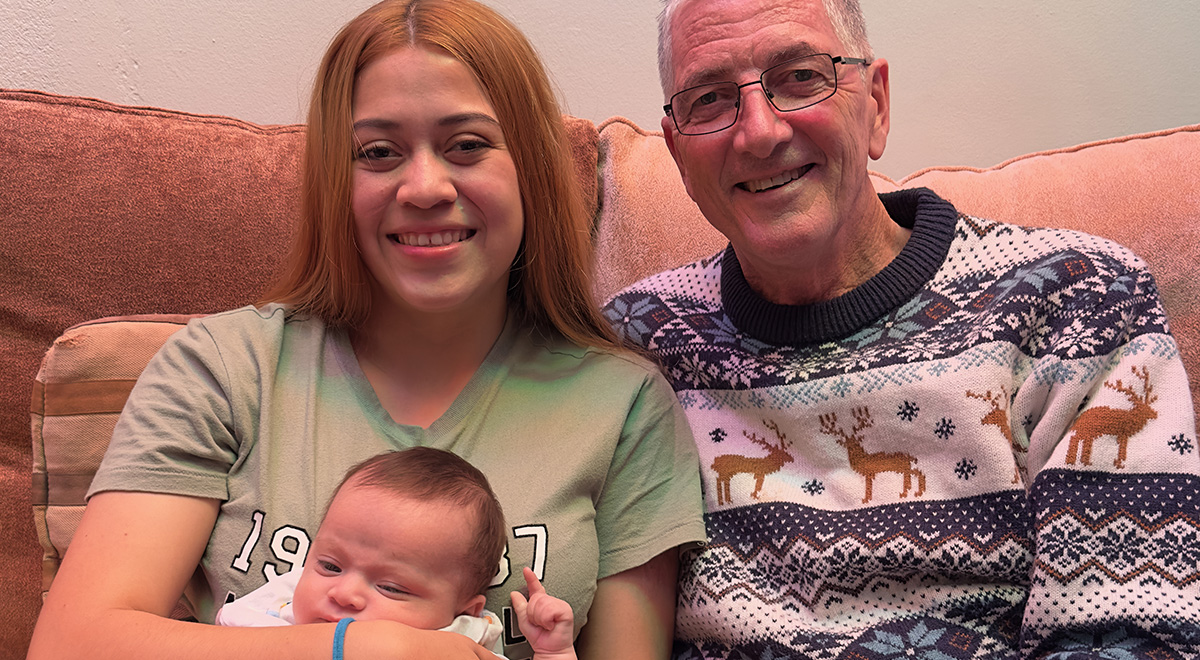
I was reminded of this by Allison, a nineteen-year-old mum from Guatemala City, who shared how the little things we did for her when she was young led to much bigger changes she is now enjoying in her life.
Allison grew up surrounded by poverty and violence, learning her earliest and hardest lessons on the city streets.
With her parents in prison, she and her siblings were cared for by their grandmother. Each day, their grandmother watched cars parked on the street, earning a few pennies from owners while they were at work.
Because of Allison’s strong connection to street life, our outreach team began working with her, her brother, and her sister. All three were invited into the mentoring centre, where we explored ways to support their education and, most importantly, keep them off the streets and out of danger.
Allison became close friends with Moses, a boy I have mentored since he was six. She also formed strong friendships with Danilo and his brother David. I often watched them play together, laughing, winding each other up, protecting one another, and instinctively recognising how to respond when one arrived in tears or covered in bruises.
Just before Christmas, Allison came to the Centro Opp mentoring centre with her baby. We had received a donation of supplies for her and her child, and I took time to sit with her and hear how she was doing.
She was keen to step into the Radio Christmas studio for a short interview and spoke passionately about the support she had received over the years. She reflected on how the small things we did, consistently and patiently over time, led to the much bigger change she is now living.
Her life and her siblings' lives have been profoundly changed.
Two years ago, she recorded a short video about the changes in her life for Radio Christmas.
Today, Allison is excited about her future as a mum. She is part of a Christian church that supports her, her husband, and their daughter, and she speaks with a hope I struggled to see in her eyes as a child.
Listening to Allison filled me with gratitude as she recalled the details we often forget: being woken every school morning, helped to get dressed and into class; having food and resources when there was none at home; support when her mother was released from prison; standing beside the family when her brother was shot at a funeral; and being present again when her grandmother died.
There was much to be thankful for.
Yet last week, I found myself staring at a photo of Allison and me, reminding myself that not every story ends the same way. Sometimes, the young people we rescue from the streets must still make their own difficult commitments to change, and not all of them survive long enough to do so.
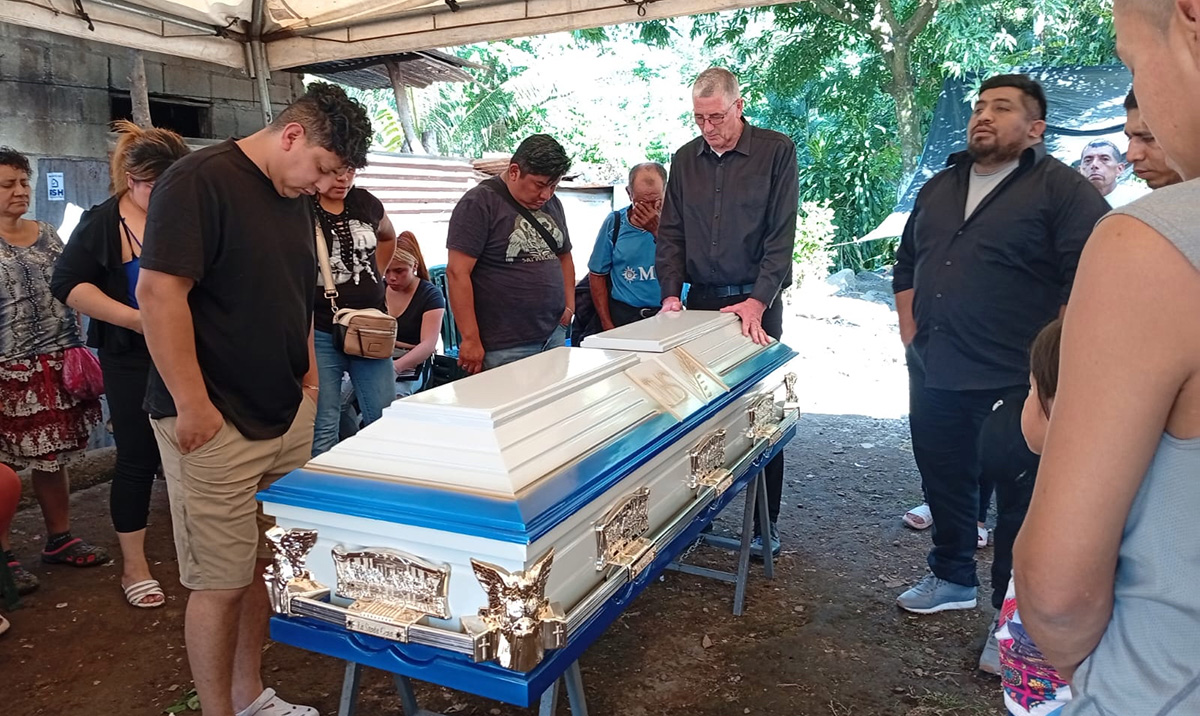
I needed that reminder as I drove back from the countryside, having just buried David.
David was gunned down in the street this past week. He was not involved in a gang and was doing nothing more than visiting his girlfriend and daughter, a journey he made daily. He did not expect to be seen as a threat. But he was. He was shot nine times in the back as he walked past the gang.
His funeral was devastating on many levels, not least because it meant burying yet another boy we had helped off the rubbish dump, a child we had supported into school, walked alongside through mentoring, and offered countless opportunities to change the direction of his life.
David did not make one catastrophic mistake. It was the accumulation of small decisions, each one seeming survivable at the time, that led him onto a path he felt he could no longer turn back from.
After yet another funeral, I retreated into the darkness of my apartment and asked myself how long I could keep going. After thirty-three years of death, violence, death threats, and the most appalling abuse of children, it is impossible not to be affected.
What I do know is this: I need to pause. To make small, intentional decisions of my own. Decisions I hope will create a greater impact in the lives of many more street-living children in the years to come.
The butterfly effect teaches us this: impact is not measured by size, but by significance. And sometimes, the smallest decision is the one that changes everything.
Maybe now it’s time for me to take that next small step forward.
 Duncan Dyason is the founder and Director of Street Kids Direct and founder of TOYBOX UK, El Castillo in Guatemala and SKDGuatemala. He first started working with street children in 1992, when he moved to Guatemala City after watching the harrowing BBC documentary "They Shoot Children Don´t They?" His work has been honoured by Her Majesty the Queen, and he was awarded an MBE in the year he celebrated having worked for over 25 years to reduce the number of children on the streets from 5,000 to zero. Duncan continues to live and volunteer with the Street Kids Direct charity in Guatemala City.